Serving Sheridan
Emergency Water Extraction in Sheridan
Call us for a free emergency water extraction estimate
Serving Sheridan
Call us for a free emergency water extraction estimate
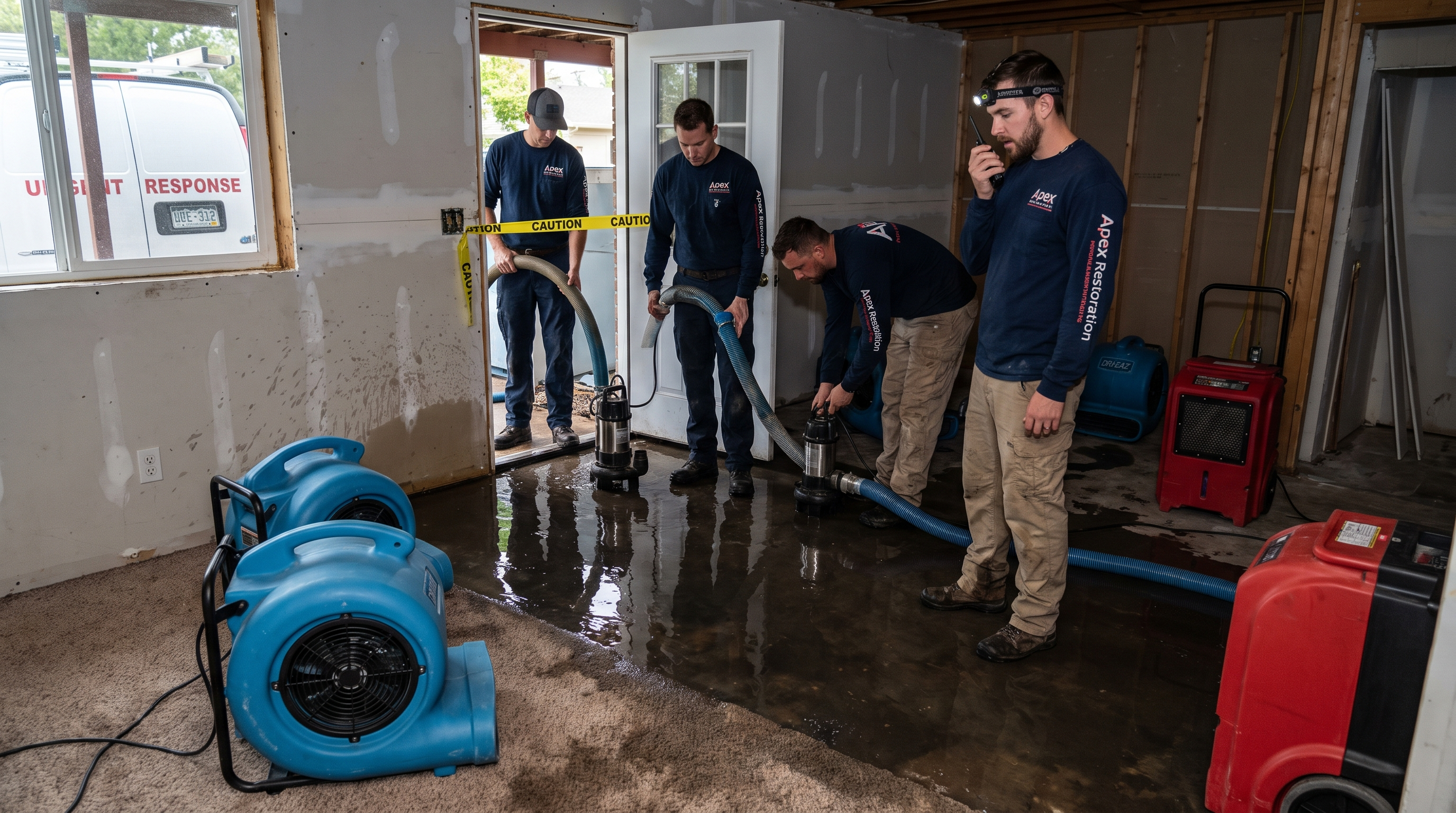
Emergency extraction is the first physical step after the water source is stopped or controlled. In Littleton homes, that can mean a burst pipe in an exterior wall, a failed appliance line, snowmelt water entering a lower level, or a crawl space taking on water after a storm.
The visible puddle is only part of the problem. Water can travel under plank flooring, through carpet pad, behind baseboards, into cabinet toe kicks, and down through ceiling cavities. Finished basements in the south metro can hold a large amount of water in carpet, drywall, trim, storage boxes, and furniture before the surface looks fully saturated.
Contractors use truck-mounted or portable extraction equipment, weighted extraction tools for carpet, pumps for deeper water, and moisture meters to find the wet perimeter. They also classify the water source because clean water from a supply line is handled differently from sump discharge, sewage, or floodwater.
Extraction does not finish the job. It reduces the water load so structural drying can work. The faster standing water is removed, the better the chance of saving materials that have not swollen, delaminated, or become contaminated.
Sheridan properties can include older homes, small commercial spaces, rentals, and buildings close to the South Platte River corridor. Water damage may come from aging plumbing, sewer backups, appliance failures, roof entry, or stormwater moving into lower areas.
Because Sheridan is compact and built out, restoration access can be tight in crawl spaces, utility rooms, alleys, and basements. Contractors need to identify the source, control the water, protect unaffected areas, and place drying equipment where it can actually reach wet materials.
Littleton Water Damage Restoration helps Sheridan property owners connect with licensed contractors for extraction, drying, mold prevention, sewage cleanup, contents support, and basement flood cleanup.
Littleton homes can have finished lower levels, unfinished crawl spaces, and older utility routes. Contractors adjust pumps, access, and documentation based on where the water sits and what materials it has touched.
Removing water without a drying plan can leave wet pad, subfloor, insulation, and framing behind. The contractor match focuses on extraction plus the moisture readings needed for the next phase.
Start extraction before flooring, drywall, and stored contents absorb more water.
Free — no obligations